

Amazon AWS Certified Solutions Architect - Professional
- Exam: AWS Certified Solutions Architect - Professional SAP-C02
- Certification: AWS Certified Solutions Architect - Professional
- Certification Provider: Amazon
100% Updated Amazon AWS Certified Solutions Architect - Professional Certification AWS Certified Solutions Architect - Professional SAP-C02 Exam Dumps
Amazon AWS Certified Solutions Architect - Professional AWS Certified Solutions Architect - Professional SAP-C02 Practice Test Questions, AWS Certified Solutions Architect - Professional Exam Dumps, Verified Answers
-
-

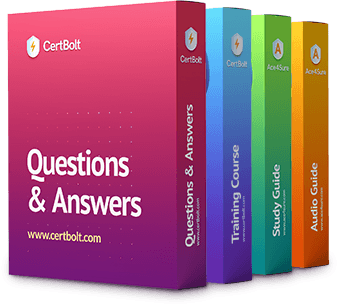
AWS Certified Solutions Architect - Professional SAP-C02 Questions & Answers
492 Questions & Answers
Includes 100% Updated AWS Certified Solutions Architect - Professional SAP-C02 exam questions types found on exam such as drag and drop, simulation, type in, and fill in the blank. Fast updates, accurate answers for Amazon AWS Certified Solutions Architect - Professional AWS Certified Solutions Architect - Professional SAP-C02 exam. Exam Simulator Included!
-
AWS Certified Solutions Architect - Professional SAP-C02 Online Training Course
192 Video Lectures
Learn from Top Industry Professionals who provide detailed video lectures based on 100% Latest Scenarios which you will encounter in exam.
-

AWS Certified Solutions Architect - Professional SAP-C02 Study Guide
1066 PDF Pages
Study Guide developed by industry experts who have written exams in the past. Covers in-depth knowledge which includes Entire Exam Blueprint.
-
-
Amazon AWS Certified Solutions Architect - Professional Certification Practice Test Questions, Amazon AWS Certified Solutions Architect - Professional Certification Exam Dumps
Latest Amazon AWS Certified Solutions Architect - Professional Certification Practice Test Questions & Exam Dumps for Studying. Cram Your Way to Pass with 100% Accurate Amazon AWS Certified Solutions Architect - Professional Certification Exam Dumps Questions & Answers. Verified By IT Experts for Providing the 100% Accurate Amazon AWS Certified Solutions Architect - Professional Exam Dumps & Amazon AWS Certified Solutions Architect - Professional Certification Practice Test Questions.
Mastering the Mindset and Exam Blueprint of AWS Certified Solutions Architect Professional
The AWS Certified Solutions Architect Professional exam is widely regarded as one of the most demanding certifications in the cloud computing industry. It goes far beyond asking candidates to recall facts about AWS services. Instead, it challenges them to think like seasoned architects who must weigh trade-offs, balance competing priorities, and design systems that are simultaneously secure, cost-efficient, highly available, and operationally sound. The exam is built around scenario-based questions that present complex, multi-layered problems requiring candidates to select the best solution from among several plausible options, all of which may appear correct at first glance.
What separates high scorers from those who struggle is not the breadth of their AWS knowledge alone but the depth of their architectural thinking. Candidates must be able to read a business requirement and immediately identify which architectural patterns apply, which AWS services support those patterns, and what the downstream implications of each design choice will be. This kind of systems thinking takes time and deliberate practice to develop, and it is the central skill that the entire exam is designed to evaluate. Preparing for this exam is, in many ways, an exercise in learning to think differently about how technology systems are designed and operated.
Why Mindset Shapes Results
Most candidates who underperform on the AWS Solutions Architect Professional exam do not fail because they lack knowledge of AWS services. They fail because they approach questions with the wrong mental framework. A common mistake is to think about what is technically possible rather than what is architecturally optimal. AWS offers many ways to solve the same problem, and the exam is specifically designed to distinguish candidates who know all the options from those who know which option is best given the constraints presented in the scenario.
Developing the right mindset means learning to read exam questions with a particular kind of critical attention. Every scenario contains embedded constraints, some explicit and some implied, that narrow the solution space significantly. Cost sensitivity, compliance requirements, operational complexity preferences, migration timelines, and existing infrastructure all serve as filters that eliminate certain answers and elevate others. Candidates who train themselves to extract and prioritize these constraints before evaluating the answer choices will consistently outperform those who rely on general AWS familiarity alone. The mindset shift from service knowledge to architectural judgment is the single most important preparation move a candidate can make.
Exam Structure and Scoring
The AWS Certified Solutions Architect Professional exam consists of 75 questions, all of which are either multiple choice with one correct answer or multiple response with two or more correct answers from a set of five options. Candidates are given 180 minutes to complete the exam, which works out to roughly two and a half minutes per question. That may seem generous until the reality sets in that many questions contain lengthy scenario descriptions that require careful reading before any evaluation of answer choices can begin. Time management is a genuine challenge for most candidates, and it must be practiced explicitly during preparation.
The exam is scored on a scale of 100 to 1000, and the passing score is 750. AWS uses a scaled scoring model, which means the raw number of correct answers is adjusted based on the statistical difficulty of the specific exam version a candidate receives. The exam is administered through Pearson VUE, either at a physical testing center or via online proctoring. Candidates who require additional time due to language accommodations or other needs should apply for those accommodations well in advance of scheduling. The exam fee is currently set at 300 US dollars, though pricing may vary by country and promotional discounts are occasionally available through AWS Training and Certification channels.
Domain Breakdown in Detail
The exam is divided into four major domains, each carrying a specific percentage of the total score. The first domain, Design Solutions for Organizational Complexity, accounts for 26 percent of the exam and covers topics such as multi-account strategies, cross-account access, hybrid connectivity, and enterprise governance at scale. This domain reflects the reality that most large organizations run AWS in complex, distributed environments rather than simple single-account setups. Candidates must understand how AWS Organizations, Service Control Policies, and AWS Control Tower work together to provide governance at scale.
The second domain, Design for New Solutions, accounts for 29 percent and is the largest single domain. It covers the full spectrum of architectural design, including compute, storage, networking, databases, security, and application integration. The third domain, Migration Planning, accounts for 25 percent and tests candidates on how to assess existing workloads, select appropriate migration strategies, and execute migrations with minimal disruption. The fourth domain, Cost Optimization, accounts for 20 percent and evaluates a candidate's ability to identify waste, right-size resources, choose cost-effective service configurations, and implement financial governance mechanisms. Together, these four domains paint a complete picture of what it means to operate as a professional-level AWS architect.
Multi-Account Architecture Thinking
One of the distinguishing features of the professional-level exam compared to the associate-level is the emphasis on multi-account design. At the professional level, candidates are expected to know not just what AWS Organizations is but how to design an account structure that aligns with an organization's security, compliance, billing, and operational requirements. This includes knowing when to use organizational units, how to apply Service Control Policies to restrict or allow specific actions across accounts, and how to use AWS Control Tower to set up landing zones that enforce baseline security configurations automatically.
The reasoning behind multi-account design comes down to blast radius control. When every workload lives in a single AWS account, a misconfiguration, a runaway cost event, or a security breach can affect everything at once. Separating workloads into distinct accounts limits the potential damage of any single incident and creates clean administrative boundaries that simplify auditing, billing, and access control. Professional-level architects must be fluent in this reasoning and must be able to evaluate multi-account scenarios quickly, identifying which account structure best fits the described organizational model and risk tolerance.
Hybrid Connectivity Architecture Choices
A significant portion of the professional exam involves hybrid architecture, which refers to solutions that span both on-premises data centers and AWS cloud infrastructure. Candidates must understand the full range of connectivity options that AWS provides and know when each one is appropriate. AWS Direct Connect provides dedicated, private network connections between on-premises facilities and AWS, offering more consistent bandwidth and lower latency than internet-based connections. Site-to-Site VPN provides encrypted connectivity over the public internet and is faster to set up but less reliable for high-throughput workloads.
The exam frequently presents scenarios where candidates must choose between Direct Connect, VPN, or a combination of both, and the right answer depends on the specific requirements described. A financial services firm with strict compliance requirements and high data transfer volumes will lean toward Direct Connect. A startup needing quick hybrid connectivity on a limited budget might start with VPN and plan for Direct Connect later. Transit Gateway adds another layer of complexity and capability by allowing multiple VPCs and on-premises networks to interconnect through a central hub, which dramatically simplifies large-scale hybrid network topologies. Knowing these options and their trade-offs at a deep level is essential for this domain.
Data Storage Architecture Decisions
Storage architecture is one of the richest areas of the exam, with numerous AWS services each optimized for different access patterns, durability requirements, and cost profiles. Amazon S3 remains the most versatile storage service, and the exam tests candidates on its more advanced features, including S3 Intelligent-Tiering, S3 Replication, S3 Object Lock, and S3 Lifecycle policies. Knowing when to use S3 Standard versus S3 Glacier versus S3 Glacier Deep Archive is not just a cost question; it also involves understanding retrieval time requirements and compliance mandates around data retention.
Beyond S3, the exam covers block storage through Amazon EBS, shared file storage through Amazon EFS and Amazon FSx, and object storage with more specialized characteristics through services like Amazon S3 on Outposts for on-premises deployments. Database storage decisions involve choosing between relational options like Amazon RDS and Aurora, NoSQL options like Amazon DynamoDB, in-memory options like ElastiCache, and analytical stores like Amazon Redshift. Each of these services has specific performance characteristics, scaling behaviors, and cost structures that the exam tests in the context of realistic business scenarios. Candidates who can match workload characteristics to storage services quickly and accurately will handle a large portion of the exam with confidence.
Security Architecture at Scale
Security is woven throughout every domain of the professional exam rather than being confined to a single section. This reflects how security must be treated in real AWS architecture work, as an integral consideration rather than an afterthought. Candidates must know the AWS shared responsibility model deeply, including where AWS's responsibility ends and where the customer's begins, and how this boundary shifts depending on whether the service is infrastructure-level, platform-level, or software-as-a-service level.
Identity and access management forms the backbone of AWS security architecture, and the exam tests it extensively. Candidates must understand IAM policies, roles, permission boundaries, and service control policies at a level of detail that goes beyond what the associate exam requires. Cross-account role assumptions, attribute-based access control, and the principle of least privilege as applied to complex, multi-service architectures are all fair game. The exam also covers encryption in depth, including how AWS Key Management Service integrates with other services, when to use customer-managed keys versus AWS-managed keys, and how envelope encryption works. Security in transit using TLS, VPC endpoint policies, and AWS PrivateLink are also tested as part of the broader security architecture picture.
Disaster Recovery Strategy Selection
Disaster recovery is a topic where the professional exam expects candidates to operate at a genuinely strategic level. There are four primary disaster recovery strategies in the AWS Well-Architected Framework, and candidates must know not just what they are but when each one is appropriate based on recovery time objectives and recovery point objectives. Backup and restore is the simplest and least expensive strategy, suitable for non-critical workloads where hours of downtime are acceptable. Pilot light keeps a minimal version of the environment running in a secondary region, ready to scale up when needed. Warm standby maintains a scaled-down but fully functional version of the production environment, while multi-site active-active runs full production capacity in multiple regions simultaneously.
The exam frequently presents disaster recovery scenarios with specific RTO and RPO requirements and asks candidates to select the most appropriate strategy. The key insight is that more aggressive recovery objectives cost significantly more money and require more operational complexity, so the right answer is always the one that meets the stated requirements without unnecessary over-engineering. Candidates should also know the specific AWS services and features that support each strategy, including AWS Backup, Cross-Region replication for RDS and DynamoDB, Route 53 health checks for automatic failover, and Global Accelerator for routing traffic across regions during a failover event.
Migration Strategy and Assessment
The migration domain of the professional exam covers the methodologies and tools used to move workloads from on-premises environments or other cloud providers into AWS. The foundational framework here is the six Rs of migration, which categorize workloads based on how they should be handled during a migration. Rehosting, also called lift-and-shift, involves moving workloads to AWS without modification. Replatforming involves minor optimizations during the move, such as switching to a managed database service. Refactoring involves significant re-architecture to take full advantage of cloud-native capabilities. Retiring, retaining, and repurchasing complete the six-category taxonomy and help architects make systematic decisions about each application in a migration portfolio.
AWS provides a suite of tools specifically designed to support migration projects, and candidates should be familiar with all of them. AWS Application Discovery Service helps organizations inventory their on-premises workloads before migration. AWS Migration Hub provides a central console for tracking migration progress across multiple tools and workloads. AWS Database Migration Service handles database migrations with minimal downtime, supporting homogeneous migrations like Oracle to Oracle as well as heterogeneous migrations like Oracle to Amazon Aurora. AWS Server Migration Service and its successor, AWS Application Migration Service, automate the replication and cutover of on-premises servers to AWS. Knowing which tool to use in which scenario is a recurring exam challenge.
Cost Optimization Architectural Patterns
Cost optimization at the professional level is about architectural decision-making, not just picking cheaper services. It involves understanding how different architectural choices compound over time into meaningful cost differences at scale. One of the most powerful cost optimization levers in AWS is the choice between on-demand, reserved, and spot pricing models for compute. Reserved Instances and Savings Plans offer significant discounts in exchange for usage commitments, and the professional exam tests candidates on which commitment model makes sense for different workload profiles. Spot Instances offer the deepest discounts but require architectures that can tolerate interruption, making them ideal for batch processing, big data analysis, and fault-tolerant web workloads.
Storage cost optimization involves intelligent use of S3 lifecycle policies to move data automatically to lower-cost tiers as it ages. Database cost optimization involves right-sizing instances, using Aurora Serverless for variable workloads, and carefully evaluating the cost implications of Multi-AZ deployments versus read replicas for different use cases. Data transfer costs are another frequently overlooked area that the exam addresses, particularly in the context of choosing between services that keep traffic within the AWS network versus those that route it over the public internet. Candidates who approach cost optimization as an architectural discipline rather than a checklist will handle this domain far more effectively.
Well-Architected Framework Application
The AWS Well-Architected Framework is the conceptual backbone of the entire professional exam. It organizes architectural thinking into six pillars: operational excellence, security, reliability, performance efficiency, cost optimization, and sustainability. While each pillar has its own set of design principles and best practices, the real challenge is applying them together in the context of a specific scenario, particularly when the pillars are in tension with each other. A design that maximizes reliability through redundancy may conflict with cost optimization goals, and the exam tests candidates on how to resolve those tensions intelligently.
Candidates should internalize the Well-Architected Framework not as a list to memorize but as a lens through which to evaluate architectural options. When reading an exam question, asking which pillar or pillars the scenario is primarily testing helps narrow the answer space quickly. A question that emphasizes business continuity and recovery is almost certainly testing the reliability pillar. A question that emphasizes reducing operational burden points toward operational excellence. A question that mentions budget constraints alongside performance requirements is testing the interplay between cost optimization and performance efficiency. This framework-driven approach to reading questions is one of the most effective exam strategies available.
Practice Exam Strategy Guide
Practice exams are the single most effective preparation tool for the AWS Solutions Architect Professional certification, but only when used correctly. Simply taking practice exams and checking the answers is far less effective than taking them slowly, reasoning through each question carefully, and then reviewing every question thoroughly regardless of whether the answer was correct or not. Understanding why a correct answer is correct is just as important as understanding why wrong answers are wrong, because the reasoning process is what transfers to novel exam questions.
The best practice resources for this exam include the official AWS sample questions, Tutorials Dojo practice exams, and Jon Bonso's question banks, all of which are known for their alignment with the actual exam's difficulty and style. Candidates should aim to complete at least three to five full-length practice exams under timed conditions before sitting for the real exam. Tracking performance by domain helps identify weak areas that need additional study. A score of 80 percent or above on multiple practice exams under timed conditions is generally a good indicator of readiness for the actual certification test.
Study Resources Worth Using
Preparing for the AWS Solutions Architect Professional exam requires a carefully selected set of study materials, as not all resources are equally aligned with what the exam actually tests. Adrian Cantrill's AWS courses are widely praised for their depth and their emphasis on architectural thinking rather than surface-level service descriptions. Stephane Maarek's courses on Udemy are another popular option, known for their clear explanations and comprehensive coverage of AWS services. Both instructors go beyond the associate level and address the kind of scenario complexity that the professional exam demands.
Official AWS documentation, whitepapers, and service FAQs are invaluable resources that many candidates overlook in favor of video courses alone. AWS publishes whitepapers on topics like security best practices, migration strategies, disaster recovery, and the Well-Architected Framework, and several of these documents contain exactly the kind of architectural guidance that exam questions are based on. The AWS re:Invent session library on YouTube is another underutilized resource, as many sessions deliver deep technical content directly from AWS service teams that goes well beyond what any course can cover. Combining structured courses with primary AWS documentation produces the most complete and durable preparation.
Conclusion
The AWS Certified Solutions Architect Professional certification is not merely a test of how many AWS services a candidate can name or describe. It is a rigorous evaluation of whether a candidate can think, reason, and decide the way a seasoned cloud architect does when faced with complex, real-world problems. The exam rewards those who have genuinely internalized architectural principles and can apply them fluidly across shifting scenarios, constraints, and priorities. It distinguishes those who have built real judgment from those who have only accumulated surface knowledge, and that distinction is precisely why the credential carries such significant weight in the industry.
Earning this certification requires a genuine transformation in how you approach technology problems. You must move from thinking about individual services in isolation to thinking about how systems of services interact, fail, recover, scale, and cost money over time. You must learn to read requirements carefully, identify the constraints that actually matter, and evaluate solutions not just for technical correctness but for fitness to the specific context described. This kind of thinking cannot be acquired by memorizing documentation alone. It develops through practice, through working through hundreds of complex scenarios, through building things on AWS and observing how they behave, and through regularly asking yourself not just what works but what works best given these particular trade-offs.
The preparation journey itself is one of the most valuable parts of pursuing this certification. Candidates who go through the process seriously come out with a fundamentally stronger mental model of cloud architecture that serves them in every project and conversation they engage in afterward. The exam gives that growth a recognized, credible endpoint that employers, clients, and colleagues across the industry understand and respect. Whether you are aiming for a senior architect role, a cloud consulting practice, or simply want to be the most technically credible person in your organization's cloud conversations, the AWS Certified Solutions Architect Professional certification is one of the most worthwhile investments you can make in your professional development. Begin with the right mindset, study with the right resources, practice with the right discipline, and the credential and the genuine expertise it represents will follow.
Pass your next exam with Amazon AWS Certified Solutions Architect - Professional certification exam dumps, practice test questions and answers, study guide, video training course. Pass hassle free and prepare with Certbolt which provide the students with shortcut to pass by using Amazon AWS Certified Solutions Architect - Professional certification exam dumps, practice test questions and answers, video training course & study guide.
-
Amazon AWS Certified Solutions Architect - Professional Certification Exam Dumps, Amazon AWS Certified Solutions Architect - Professional Practice Test Questions And Answers
Got questions about Amazon AWS Certified Solutions Architect - Professional exam dumps, Amazon AWS Certified Solutions Architect - Professional practice test questions?
Click Here to Read FAQ -
-
Top Amazon Exams
- AWS Certified Generative AI Developer - Professional AIP-C01 - AWS Certified Generative AI Developer - Professional AIP-C01
- AWS Certified Solutions Architect - Associate SAA-C03 - AWS Certified Solutions Architect - Associate SAA-C03
- AWS Certified Solutions Architect - Professional SAP-C02 - AWS Certified Solutions Architect - Professional SAP-C02
- AWS Certified AI Practitioner AIF-C01 - AWS Certified AI Practitioner AIF-C01
- AWS Certified Cloud Practitioner CLF-C02 - AWS Certified Cloud Practitioner CLF-C02
- AWS Certified Security - Specialty SCS-C03 - AWS Certified Security - Specialty SCS-C03
- AWS Certified Machine Learning Engineer - Associate MLA-C01 - AWS Certified Machine Learning Engineer - Associate MLA-C01
- AWS Certified CloudOps Engineer - Associate SOA-C03 - AWS Certified CloudOps Engineer - Associate SOA-C03
- AWS Certified DevOps Engineer - Professional DOP-C02 - AWS Certified DevOps Engineer - Professional DOP-C02
- AWS Certified Advanced Networking - Specialty ANS-C01 - AWS Certified Advanced Networking - Specialty ANS-C01
- AWS Certified Data Engineer - Associate DEA-C01 - AWS Certified Data Engineer - Associate DEA-C01
- AWS Certified Developer - Associate DVA-C02 - AWS Certified Developer - Associate DVA-C02
- AWS Certified Security - Specialty SCS-C02 - AWS Certified Security - Specialty SCS-C02
- AWS Certified SysOps Administrator - Associate - AWS Certified SysOps Administrator - Associate (SOA-C02)
-
Purchase Amazon AWS Certified Solutions Architect - Professional SAP-C02 Exam Training Products Individually
Last Week Results!
Get Questions & Answers PDF Version
With the PDF Version of the exam questions, you can study at any time and place, which are convenient to you. This means that you can work with the AWS Certified Solutions Architect - Professional Questions & Answers PDF Version on your PC or use it on your portable device while on the way to your work or home. The PDF exam file also offers you the possibility to print it and use this printed version if you prefer it over the digital one.
Since the file is in the .pdf format, you can open it with a wide range of programs and applications, including Google Docs, OpenOffice, and Adobe Acrobat Reader DC. It is a convenient and easy-to-use option that will help you master new knowledge and skills with relevant materials.
* PDF Version is an add-on to your purchase of AWS Certified Solutions Architect - Professional Questions & Answers and can't be purchased separately.
Only Registered Members can Download Exam Demo Questions & Answers
Please fill out your email address below in order to download exam demo Questions & Answers.
Registration is Free and Easy, You Simply need to provide a valid email address.
- Trusted by hundreds of IT Certification Candidates Every Month
- 1200+ Exams Available
- Instant download After Registration