

Amazon AWS Certified Cloud Practitioner
- Exam: AWS Certified Cloud Practitioner CLF-C02
- Certification: AWS Certified Cloud Practitioner
- Certification Provider: Amazon
100% Updated Amazon AWS Certified Cloud Practitioner Certification AWS Certified Cloud Practitioner CLF-C02 Exam Dumps
Amazon AWS Certified Cloud Practitioner AWS Certified Cloud Practitioner CLF-C02 Practice Test Questions, AWS Certified Cloud Practitioner Exam Dumps, Verified Answers
-
-
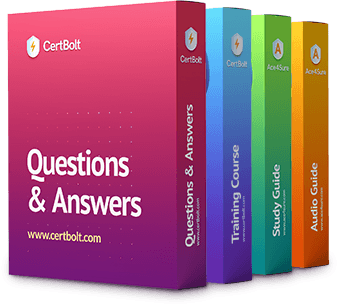
AWS Certified Cloud Practitioner CLF-C02 Questions & Answers
918 Questions & Answers
Includes 100% Updated AWS Certified Cloud Practitioner CLF-C02 exam questions types found on exam such as drag and drop, simulation, type in, and fill in the blank. Fast updates, accurate answers for Amazon AWS Certified Cloud Practitioner AWS Certified Cloud Practitioner CLF-C02 exam. Exam Simulator Included!
-
AWS Certified Cloud Practitioner CLF-C02 Online Training Course
274 Video Lectures
Learn from Top Industry Professionals who provide detailed video lectures based on 100% Latest Scenarios which you will encounter in exam.
-

AWS Certified Cloud Practitioner CLF-C02 Study Guide
472 PDF Pages
Study Guide developed by industry experts who have written exams in the past. Covers in-depth knowledge which includes Entire Exam Blueprint.
-
-
Amazon AWS Certified Cloud Practitioner Certification Practice Test Questions, Amazon AWS Certified Cloud Practitioner Certification Exam Dumps
Latest Amazon AWS Certified Cloud Practitioner Certification Practice Test Questions & Exam Dumps for Studying. Cram Your Way to Pass with 100% Accurate Amazon AWS Certified Cloud Practitioner Certification Exam Dumps Questions & Answers. Verified By IT Experts for Providing the 100% Accurate Amazon AWS Certified Cloud Practitioner Exam Dumps & Amazon AWS Certified Cloud Practitioner Certification Practice Test Questions.
Your Ultimate Guide to the AWS Certified Cloud Practitioner
The AWS Certified Cloud Practitioner certification is the entry-level credential in Amazon Web Services' comprehensive certification framework, designed to validate foundational knowledge of cloud computing concepts and the AWS platform without requiring deep technical expertise or hands-on implementation experience. Unlike the technical associate and professional certifications higher in the AWS certification hierarchy, the Cloud Practitioner credential is explicitly positioned as a business and conceptual credential that serves professionals who need to understand what AWS offers, how cloud computing works, and how AWS services map to common business requirements without necessarily being the person who configures and manages those services day to day. This positioning makes it genuinely unique among AWS certifications and accounts for its broad appeal across both technical and non-technical professional audiences.
The certification validates knowledge across four primary domains including cloud concepts, security and compliance, cloud technology and services, and billing, pricing, and support. These domains together paint a picture of AWS as a platform, covering the foundational principles of cloud computing, the shared responsibility model that governs security obligations between AWS and its customers, the core service categories that make up the AWS platform, and the economic model through which AWS delivers and charges for those services. Professionals who earn this credential demonstrate that they can participate meaningfully in conversations about cloud adoption, evaluate AWS service options at a conceptual level, and contribute to cloud-related business decisions with an informed understanding of what the platform can and cannot do.
The Broad Range of Professionals Who Benefit From This Credential
The AWS Certified Cloud Practitioner certification serves an unusually wide professional audience compared to most technical certifications, which tend to appeal narrowly to practitioners in specific technical roles. Business analysts, project managers, sales professionals, marketing professionals, finance and procurement specialists, legal and compliance professionals, and executives who interact with technology decisions all have legitimate reasons to pursue this credential. For these professionals, the certification provides a structured way to develop the cloud literacy needed to communicate effectively with technical colleagues, evaluate cloud-related proposals and contracts with greater confidence, and contribute meaningfully to organizational decisions about cloud adoption and investment.
Technical professionals also benefit from the Cloud Practitioner certification, particularly those who are transitioning into cloud-focused roles from on-premises IT backgrounds or from non-cloud technology disciplines. For a network engineer who has spent a career managing physical infrastructure, for a database administrator whose experience is entirely with on-premises database systems, or for a software developer whose work has not previously involved cloud infrastructure, the Cloud Practitioner provides a structured introduction to the AWS platform that fills conceptual gaps and provides the vocabulary needed to engage with cloud topics in professional contexts. Many technical professionals use it as a deliberate first step in a longer AWS certification journey, recognizing that the foundational knowledge it builds makes subsequent technical certifications more approachable and better contextualized.
A Detailed Look at the Four Exam Domains
The cloud concepts domain introduces the fundamental principles of cloud computing including the definition of cloud computing itself, the three primary service models of infrastructure as a service, platform as a service, and software as a service, and the deployment models of public cloud, private cloud, hybrid cloud, and multi-cloud. This domain also covers the core value proposition of cloud computing, including the shift from capital expenditure to operational expenditure, the benefits of global reach and elasticity, and the economic advantages of paying only for resources consumed rather than provisioning capacity for peak demand. Understanding these concepts at a genuine level rather than a superficial one requires engaging with how they manifest in real organizational decisions rather than simply memorizing definitions.
The security and compliance domain addresses the AWS shared responsibility model, which defines which security obligations belong to AWS and which belong to the customer depending on the service type being consumed. This domain covers AWS identity and access management, including how users, groups, roles, and policies work together to control access to AWS resources, as well as the compliance programs and certifications that AWS maintains and the tools AWS provides to help customers meet their own compliance obligations. The cloud technology and services domain is the broadest of the four, covering the major AWS service categories including compute, storage, databases, networking, and management tools at a conceptual level sufficient to understand what each category provides and when different service options within a category might be appropriate. The billing, pricing, and support domain addresses the AWS pricing model, cost management tools, and the different support plan tiers available to AWS customers.
How Difficult the Exam Is for Different Types of Candidates
The Cloud Practitioner exam is consistently rated as one of the more accessible professional certifications available, but the experience of sitting for it varies considerably depending on your background and how thoroughly you have prepared. For technical professionals with existing cloud or infrastructure experience, candidates who have worked with AWS services in any capacity, or individuals with strong general IT knowledge, the exam is genuinely straightforward with a few weeks of focused preparation. For non-technical professionals who are approaching cloud computing concepts with limited prior exposure, the exam presents a more meaningful challenge that requires dedicated study time and a genuine effort to understand how cloud concepts apply to real business scenarios.
The exam consists of 65 questions, a mix of multiple choice and multiple response formats, and must be completed within 90 minutes. The passing score is 700 on a scale of 100 to 1000, which represents a relatively achievable threshold compared to many professional certifications. Most candidates who prepare adequately report that 90 minutes provides sufficient time to work through all questions without feeling rushed, and that the question difficulty is consistent with the foundational positioning of the credential. The scenarios presented in exam questions are generally straightforward compared to the complex multi-service architectural scenarios that appear in associate and professional-level exams, reflecting the conceptual rather than technical nature of what this credential assesses.
Building Your Study Plan From the Ground Up
Constructing an effective study plan for the Cloud Practitioner exam begins with an honest self-assessment of your current knowledge level across the four exam domains. Candidates with strong cloud backgrounds might need only two to three weeks of focused review to fill specific gaps and familiarize themselves with the exam format. Those approaching cloud computing with minimal prior exposure should plan for six to eight weeks of consistent study that builds genuine understanding progressively rather than cramming content in the final days before the exam. The self-assessment step is critical because it prevents both the waste of over-preparing in areas where you are already competent and the risk of under-preparing in areas where your knowledge has genuine gaps.
Once you have assessed your starting point, structure your study schedule around the domain weightings that the official AWS exam guide specifies. Cloud technology and services carries the heaviest weighting at approximately 34 percent of the exam, meaning it deserves the most study time. Security and compliance follows at roughly 30 percent, making it the second priority. Cloud concepts at approximately 24 percent and billing, pricing, and support at around 12 percent round out the distribution. Allocating your study hours proportionally to these weights ensures that your preparation investment is concentrated where it matters most for your final score. Build in regular checkpoints using practice exams throughout your study period to track your progress and identify areas requiring additional attention before your exam date.
AWS Training and Official Learning Resources Available to You
Amazon Web Services provides an extensive range of official learning resources for Cloud Practitioner preparation, many of which are available at no cost through the AWS Training and Certification portal. The AWS Cloud Practitioner Essentials course is the flagship official preparation resource, a self-paced digital course that covers all four exam domains through a combination of video instruction, reading content, and knowledge checks that reinforce learning at each stage. This course is designed specifically for the Cloud Practitioner audience and explains AWS concepts in accessible language that does not assume deep technical background, making it appropriate for non-technical professionals and technical beginners alike.
AWS Skill Builder, the company's online learning platform, provides access to the Cloud Practitioner Essentials course along with a substantial library of supplementary content including digital classroom courses, AWS Jam challenges that provide hands-on experience through gamified scenarios, and official practice question sets that give you authentic exposure to the exam format before your actual test date. The AWS free tier, which provides limited free access to a selection of AWS services for twelve months after account creation, supports hands-on exploration of services covered on the exam without incurring costs for modest usage. While the Cloud Practitioner exam does not require hands-on technical proficiency, spending time in the AWS console familiarizing yourself with what different services look like and how they are organized significantly enriches your conceptual understanding and makes service-related exam questions feel more concrete.
Third-Party Courses That Accelerate Preparation
The third-party training market for AWS Cloud Practitioner preparation is exceptionally well developed, with numerous high-quality courses available across multiple platforms that supplement official AWS training with instructor perspective, practical context, and exam-focused content organization. Stephane Maarek's AWS Certified Cloud Practitioner course on Udemy is among the most widely recommended by candidates who have recently passed the exam, offering comprehensive domain coverage with clear explanations, practical demonstrations, and exam tips that reflect deep familiarity with what the actual test emphasizes. The course is regularly updated to reflect changes in exam content and AWS service offerings, ensuring that candidates study current and accurate information.
Adrian Cantrill's cloud practitioner content provides particularly strong conceptual depth for candidates who want to genuinely understand cloud computing principles rather than simply memorize enough to pass the exam. His teaching approach emphasizes building accurate mental models of how AWS services work and interact, which produces a richer and more durable understanding than surface-level exam preparation alone provides. For candidates who learn well from video instruction, the investment in a high-quality third-party course pays dividends not just in exam performance but in the confidence with which you can discuss AWS concepts in professional contexts after earning the credential. Whichever course you choose, prioritize resources that have been recently updated, carry strong reviews from verified purchasers, and include practice questions alongside instructional content.
Practice Exams and How to Get Maximum Value From Them
Practice exams are indispensable tools for Cloud Practitioner preparation, serving both as assessment instruments that reveal where your knowledge stands and as learning instruments that build understanding through the process of working through questions and reviewing explanations. The key to extracting maximum value from practice exams is approaching them as diagnostic and learning tools rather than simply score measurement devices. Taking a practice exam, noting your score, and moving on without reviewing your incorrect answers generates almost none of the learning value these resources can provide. The genuine value comes from reading the explanation for every question you answered incorrectly, understanding why the correct answer is right and why your chosen answer was wrong, and connecting that understanding back to the relevant study material.
Jon Bonso's practice exams available through Tutorials Dojo are consistently rated among the best available for Cloud Practitioner preparation, offering large question banks with detailed explanations that go beyond simply identifying the correct answer. AWS's own official practice question set, available through AWS Skill Builder, provides the most direct benchmark for actual exam difficulty and question style, making it valuable even if its question volume is smaller than third-party alternatives. Aim to complete multiple full-length practice exams under timed conditions in the weeks leading up to your scheduled exam date, using your results to identify specific domains or topics requiring additional review. Most preparation experts suggest achieving consistent practice exam scores above 80 percent before scheduling your actual exam, providing a reasonable confidence margin that accounts for the possibility of exam questions that feel more challenging than your practice material.
Hands-On AWS Experience During Preparation
While the Cloud Practitioner exam does not test your ability to configure AWS services from a technical standpoint, gaining some hands-on familiarity with the AWS console and the basic appearance and organization of key services provides preparation benefits that extend beyond what reading and video instruction alone can deliver. Creating a free AWS account and spending time in the console exploring the services covered on the exam makes those services feel real and concrete rather than abstract concepts described in study materials. When you have actually navigated to the EC2 console and seen what instances look like, clicked through the S3 interface and created a bucket, or explored the IAM dashboard and created a user, the exam questions about these services connect to actual experience rather than purely theoretical knowledge.
The AWS free tier provides access to a meaningful selection of services within usage limits that are sufficient for exploratory learning without generating costs. EC2, S3, Lambda, DynamoDB, and RDS are all available under free tier conditions at usage levels appropriate for exam preparation exercises. Completing the free hands-on labs available through AWS Skill Builder provides structured guidance for exploring these services in ways specifically designed to reinforce exam-relevant concepts. Even a few hours of hands-on exploration during your preparation period meaningfully enriches your understanding of how AWS services work, how they relate to each other, and how the AWS console organizes and presents the platform's capabilities. That enriched understanding pays dividends not only on the exam but in every professional conversation about AWS that follows.
The AWS Pricing Model and Cost Management Concepts
The billing, pricing, and support domain is one that many candidates underestimate during preparation, treating it as a secondary concern relative to the service knowledge and security content that feels more substantive. In practice, AWS pricing concepts appear throughout the exam not just in dedicated billing questions but embedded in service selection scenarios where cost considerations are relevant factors in evaluating which option best suits a described requirement. A thorough understanding of how AWS prices its services, including the distinctions between pay-as-you-go pricing, reserved capacity pricing, and savings plan commitments, is necessary for answering these embedded cost questions correctly as well as the direct billing domain questions.
The AWS Cost Explorer, AWS Budgets, and AWS Cost and Usage Report are the primary cost management tools that appear on the exam, and understanding what each one provides and when you would use it is important for the billing domain. The AWS Total Cost of Ownership calculator and the AWS Pricing Calculator are tools that help customers evaluate the cost implications of cloud adoption decisions, and their purposes and appropriate use cases appear in exam questions as well. The five AWS support plans, ranging from Basic through Business and Enterprise On-Ramp to Enterprise, carry specific features and response time commitments that are frequently tested in questions requiring you to select the appropriate support tier for a described organizational requirement. Spending dedicated study time on these pricing and support concepts, rather than treating them as self-evident, prevents the avoidable score loss that comes from underestimating this domain.
Security and the Shared Responsibility Model in Depth
Security content on the Cloud Practitioner exam is anchored by the shared responsibility model, AWS's framework for defining which security obligations belong to AWS as the infrastructure provider and which belong to customers as the consumers of that infrastructure. The model divides responsibility along the line of security of the cloud, which is AWS's responsibility covering the physical infrastructure, hardware, networking, and foundational services that make up the AWS platform, versus security in the cloud, which is the customer's responsibility covering everything they build and configure on top of that infrastructure. Understanding where this boundary falls for different service types, including how it shifts between infrastructure services, container services, and abstracted services, is essential for answering shared responsibility questions correctly.
AWS Identity and Access Management is the other major security topic that requires thorough understanding for the Cloud Practitioner exam. IAM concepts including users, groups, roles, and policies, the principle of least privilege as the guiding principle for access control design, multi-factor authentication as a security enhancement for user accounts, and root account protection as a critical security practice all appear in exam questions. AWS security services including AWS Shield for DDoS protection, AWS WAF for web application firewall capabilities, Amazon GuardDuty for threat detection, and AWS CloudTrail for API activity logging are covered at a conceptual level, requiring you to understand what each service does and the category of security problem it addresses rather than the technical details of how to configure it.
What Happens After You Pass the Exam
Passing the AWS Certified Cloud Practitioner exam triggers a straightforward credential award process through AWS Training and Certification, where your digital badge and certificate become available in your certification account within a few days of your exam result being confirmed. AWS partners with Credly to issue digital badges that can be shared on LinkedIn, added to email signatures, and included on professional profiles in ways that make your certification visible to employers and professional contacts. Updating your LinkedIn profile to reflect your new credential promptly after earning it maximizes the visibility benefit and often generates professional engagement from connections in the AWS and cloud computing communities.
The Cloud Practitioner certification is valid for three years, after which recertification is required either by passing the current version of the exam or by earning any higher-level AWS certification, since passing a higher-level exam automatically renews lower-level credentials in the same track. For most professionals, the Cloud Practitioner serves as a stepping stone toward higher-level AWS certifications rather than a terminal credential, and beginning to plan your next certification pursuit shortly after passing it capitalizes on the AWS knowledge foundation you have built and the study momentum you have developed. The associate-level certifications, including the AWS Solutions Architect Associate, AWS Developer Associate, and AWS SysOps Administrator Associate, represent the natural progression from the Cloud Practitioner for professionals who want to move into technical cloud roles.
Common Exam Day Mistakes and How to Avoid Them
Candidates sitting for the Cloud Practitioner exam make a predictable set of avoidable mistakes that cost points without reflecting genuine knowledge gaps. The most frequent is misreading questions that include qualifying words like most cost-effective, best practice, or least privilege, which fundamentally change what the question is asking and what the correct answer is. Reading each question carefully, identifying the key qualifying terms, and using those terms to filter your evaluation of the answer choices prevents the frustrating experience of choosing a plausible answer that would be correct if the question had been asking something slightly different.
Multiple response questions, which require you to select two or more correct answers from a list of five or more options, present a different challenge from standard multiple choice questions and catch unprepared candidates off guard. For these questions, approaching each answer choice independently and evaluating whether it is correct on its own merits before considering which combination to select produces more reliable results than trying to evaluate all options simultaneously. Time management is rarely a serious concern on the Cloud Practitioner exam given the 90-minute allocation for 65 questions, but flagging questions you are uncertain about and returning to them after completing the questions you are confident about is a sound strategy that ensures you do not leave any question unanswered due to time pressure in the unlikely event that some questions consume more time than expected.
Building on the Cloud Practitioner Toward a Stronger AWS Career
The AWS Certified Cloud Practitioner is most valuable when treated as the first step in a planned AWS certification journey rather than a standalone achievement. The foundational knowledge it builds and documents creates the platform from which more technical and more specialized AWS credentials become accessible, and the credential itself signals to employers that you have committed to AWS as a professional focus area rather than simply having casual familiarity with the platform. Planning your certification trajectory from the beginning, with a clear sense of which technical roles or specializations you are working toward, ensures that each subsequent credential you pursue builds on the previous one in a coherent and career-relevant way.
For professionals targeting cloud architecture roles, the AWS Solutions Architect Associate is the most natural next step after the Cloud Practitioner, providing the technical depth in AWS service selection, architectural best practices, and design principles that the Cloud Practitioner intentionally omits. For developers moving into cloud-native application development, the AWS Developer Associate covers the service APIs, deployment automation, and serverless computing concepts most relevant to that trajectory. For operations professionals taking on cloud infrastructure management responsibilities, the AWS SysOps Administrator Associate addresses the monitoring, automation, and operational management topics most relevant to those roles. Whichever path aligns with your career objectives, the Cloud Practitioner credential provides the foundation that makes the journey toward those more advanced credentials both more accessible and more rewarding.
Conclusion
The AWS Certified Cloud Practitioner certification has earned its position as one of the most widely pursued professional credentials in the technology sector through a combination of genuine market relevance, accessible preparation requirements, and broad applicability across both technical and non-technical professional roles. For organizations that are adopting AWS or managing existing AWS environments, having employees who possess documented foundational knowledge of the platform creates communication efficiency, accelerates informed decision-making, and builds a shared vocabulary that reduces the friction between technical and business stakeholders in cloud-related conversations. That organizational value translates directly into individual career value for professionals who can demonstrate cloud literacy through a recognized credential.
The preparation journey for the Cloud Practitioner exam, when approached with genuine curiosity about how cloud computing works and what AWS specifically offers, produces professional benefits that extend well beyond the credential itself. The structured engagement with cloud economics, security principles, service categories, and pricing models that the exam requires builds a mental framework for thinking about cloud technology that makes every subsequent engagement with AWS more productive. Technical professionals gain conceptual context that deepens their understanding of the services they implement. Non-technical professionals gain the vocabulary and conceptual fluency needed to engage meaningfully in technical conversations that increasingly drive business decisions. Both groups emerge from the preparation process better equipped for the cloud-infused professional environments that have become the norm across virtually every industry.
For professionals who are questioning whether to invest the time and modest financial resources the Cloud Practitioner requires, the most compelling argument is the credential's rare combination of accessibility and genuine relevance. It does not demand months of intensive preparation, it does not require deep technical experience, and it does not cost a significant amount to pursue. What it does require is genuine engagement with the material, honest self-assessment of your knowledge gaps, and the discipline to prepare systematically rather than approaching the exam casually. Candidates who bring that engagement and discipline to their preparation consistently find that the Cloud Practitioner exam rewards them not just with a passing score and a digital badge but with a meaningfully improved ability to participate in the cloud computing conversations that are shaping organizations and careers across the global economy. That combination of credential and capability is what makes the AWS Certified Cloud Practitioner one of the most worthwhile certification investments available to professionals at virtually every career stage and in virtually every professional discipline.
Pass your next exam with Amazon AWS Certified Cloud Practitioner certification exam dumps, practice test questions and answers, study guide, video training course. Pass hassle free and prepare with Certbolt which provide the students with shortcut to pass by using Amazon AWS Certified Cloud Practitioner certification exam dumps, practice test questions and answers, video training course & study guide.
-
Amazon AWS Certified Cloud Practitioner Certification Exam Dumps, Amazon AWS Certified Cloud Practitioner Practice Test Questions And Answers
Got questions about Amazon AWS Certified Cloud Practitioner exam dumps, Amazon AWS Certified Cloud Practitioner practice test questions?
Click Here to Read FAQ -
-
Top Amazon Exams
- AWS Certified Generative AI Developer - Professional AIP-C01 - AWS Certified Generative AI Developer - Professional AIP-C01
- AWS Certified Solutions Architect - Associate SAA-C03 - AWS Certified Solutions Architect - Associate SAA-C03
- AWS Certified Solutions Architect - Professional SAP-C02 - AWS Certified Solutions Architect - Professional SAP-C02
- AWS Certified AI Practitioner AIF-C01 - AWS Certified AI Practitioner AIF-C01
- AWS Certified Cloud Practitioner CLF-C02 - AWS Certified Cloud Practitioner CLF-C02
- AWS Certified Security - Specialty SCS-C03 - AWS Certified Security - Specialty SCS-C03
- AWS Certified Machine Learning Engineer - Associate MLA-C01 - AWS Certified Machine Learning Engineer - Associate MLA-C01
- AWS Certified CloudOps Engineer - Associate SOA-C03 - AWS Certified CloudOps Engineer - Associate SOA-C03
- AWS Certified DevOps Engineer - Professional DOP-C02 - AWS Certified DevOps Engineer - Professional DOP-C02
- AWS Certified Advanced Networking - Specialty ANS-C01 - AWS Certified Advanced Networking - Specialty ANS-C01
- AWS Certified Data Engineer - Associate DEA-C01 - AWS Certified Data Engineer - Associate DEA-C01
- AWS Certified Developer - Associate DVA-C02 - AWS Certified Developer - Associate DVA-C02
- AWS Certified Security - Specialty SCS-C02 - AWS Certified Security - Specialty SCS-C02
- AWS Certified SysOps Administrator - Associate - AWS Certified SysOps Administrator - Associate (SOA-C02)
-
Purchase Amazon AWS Certified Cloud Practitioner CLF-C02 Exam Training Products Individually
Last Week Results!
Get Questions & Answers PDF Version
With the PDF Version of the exam questions, you can study at any time and place, which are convenient to you. This means that you can work with the AWS Certified Cloud Practitioner Questions & Answers PDF Version on your PC or use it on your portable device while on the way to your work or home. The PDF exam file also offers you the possibility to print it and use this printed version if you prefer it over the digital one.
Since the file is in the .pdf format, you can open it with a wide range of programs and applications, including Google Docs, OpenOffice, and Adobe Acrobat Reader DC. It is a convenient and easy-to-use option that will help you master new knowledge and skills with relevant materials.
* PDF Version is an add-on to your purchase of AWS Certified Cloud Practitioner Questions & Answers and can't be purchased separately.
Only Registered Members can Download Exam Demo Questions & Answers
Please fill out your email address below in order to download exam demo Questions & Answers.
Registration is Free and Easy, You Simply need to provide a valid email address.
- Trusted by hundreds of IT Certification Candidates Every Month
- 1200+ Exams Available
- Instant download After Registration